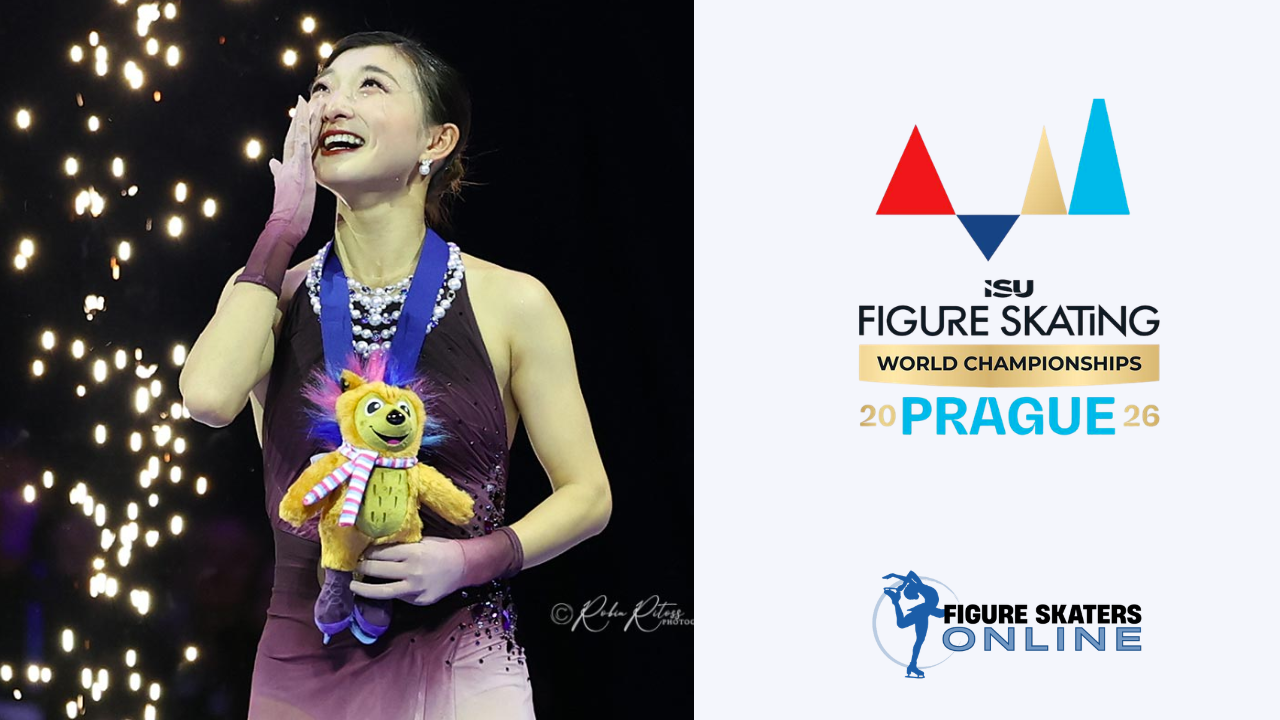
The 2026 World Championships in Prague, Czech Republic brought a close to the 2025-2026 Olympic figure skating season. The last time the World Championships was held in Czech Republic was in 1993. At those World Championships, Canada’s Kurt Browning won his fourth and final title of his career. Ukraine’s Oksana Baiul took the title, less than a year before winning her Olympic title. Isabelle Brasseur and Lloyd Eisler of Canada took the pairs’ title and Maya Usova and Alexander Zhulin of Russia won the ice dance event.
1993 also saw two competitors with connections to two of the male competitors at the 2026 event. Ilia Malinin’s mother, Tatiana Malinina, competed for Uzbekistan, while Yuma Kagiyama’s father, Masakazu Kagiyama, was 8th in the men’s event, representing Japan.
Men
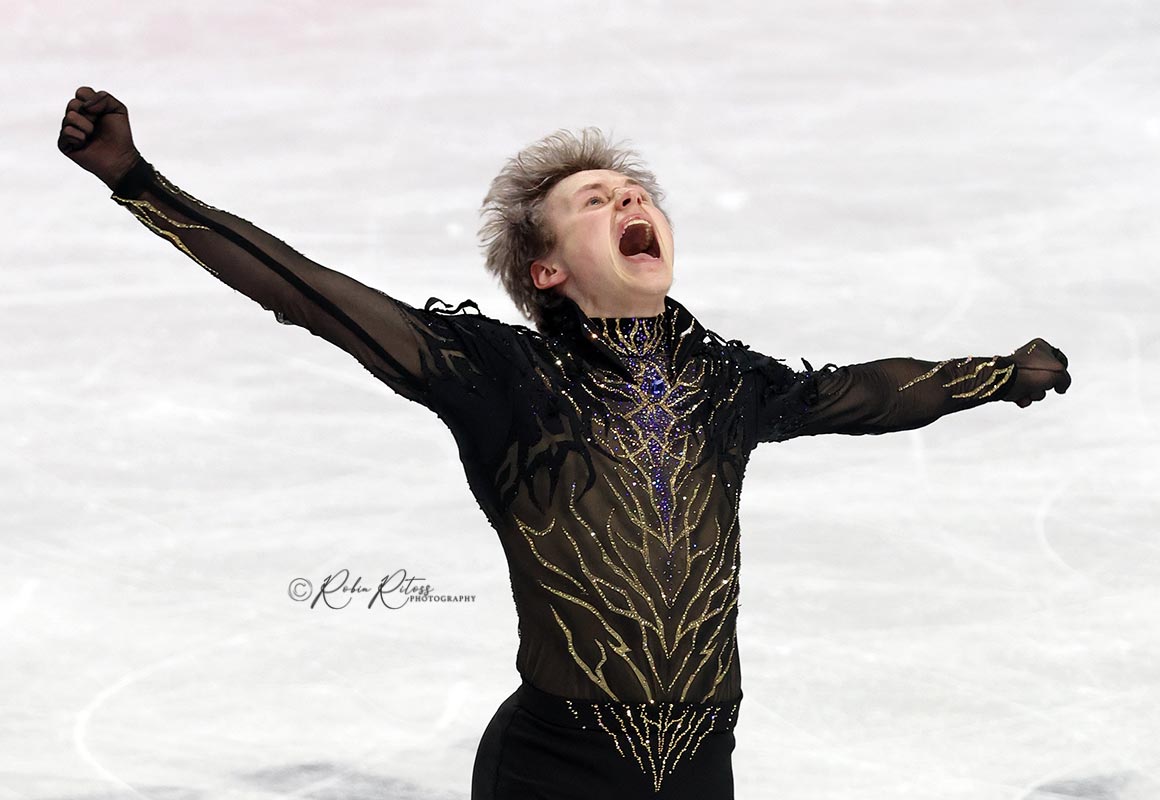 Looking for redemption after his disappointing eighth-place finish at the Olympics in Milan, two-time World champion Ilia Malinin earned a personal best score in the short program and found himself with an almost 10 point lead heading into the free skate.
The four-time U.S. Champion opened his “The Ball” by Asaf Avidan, “The Smell of the Sea” by Alan Mayer and “Code Duello” by Power-Haus, Sergiu-Dan Muresan program with a quadruple flip. He did not attempt the quadruple Axel and went with a triple Axel instead. He executed three more clean quadruple jumps, including a quadruple Lutz, quadruple toe (in combination with a triple toe) and a quadruple Salchow-double Axel sequence. He did have a second quadruple Lutz in sequence with a Euler-triple Salchow called slightly rotated. The crowd did go crazy when he landed his backflip. He earned a free skate score of 218.11 and earned a total score of 329.40 to win his third title.
“It feels really different, because going into this competition, I had no expectations,” said Malinin. “I wanted to just come out here, enjoy the atmosphere and enjoy the environment of the figure skating world, and you don’t really care if I have won or lost.”
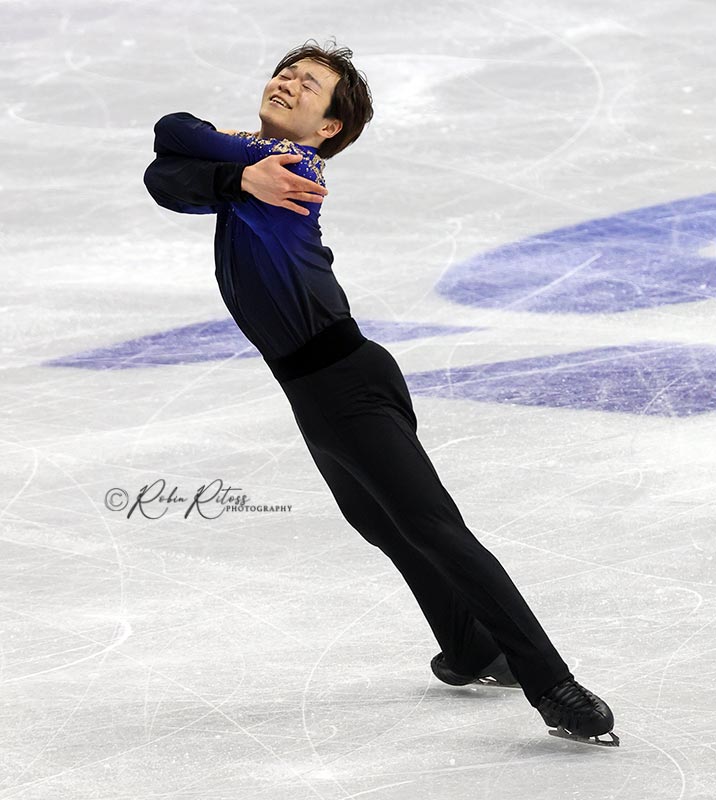 After the short program, Yuma Kagiyama, who won the silver medalist in the team event and individual event at the Olympics in Milan, found himself sitting in sixth place after a fluke mistake on his triple Axel. In his final performance of his Christopher Tin’s “Turandot Finale” free skate, Kagiyama landed three quadruple jumps, include two quadruple toe jumps and a quadruple Salchow. He also landed six triple jumps, including a triple Axel-Euler-triple Salchow combination. Kagiyama earned a new personal best score of 212.87 and pulled up to second at 306.67 to win his third World silver medal.
“I was able to fully express myself and had a lot of fun. I have been frustrated for about a season because I could not be satisfied with my free skate,” Kagiyama remarked after the skate. “I am really happy that in the final event of my Olympic season, which could also be considered my swan song, I was able to do something that made me satisfied. I had a lot of tough times, especially after the Beijing Olympics. I was injured and could not perform to my satisfaction. Those were really hard times. But because we worked through them together, that is what made it so meaningful. Today’s good performance feels like a small reward. Of course, first of all, I am skating for myself to deliver the best performance that I can be satisfied with, but also for my father and the people watching me. It is good that everyone was satisfied with that part.”
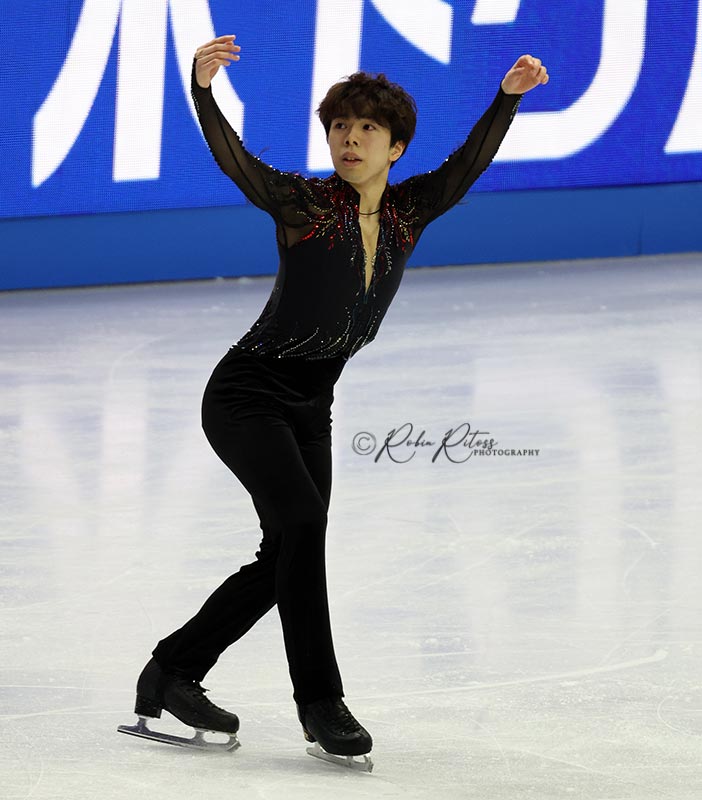 Sitting in fourth place after the short program, 2026 Olympic bronze medalist Shun Sato was looking to hop on the podium and claim his first World medal. In his “Firebird” program, Sato landed three quadruple jumps, including a quadruple and two quadruple toes. He scored a 192.70 in the free skate, which was third in the segment. The reigning Olympic bronze medalist accumulated 288.54 points to move up to third and earn the bronze medal, his first World medal.
“It’s been a very long season. I’m glad I am being able to end it on such a high note,” said Sato. “This program is one of my favourite. I’m happy I could put a strong performance again. I want to thank my coach, without his support I couldn’t deliver these results.” 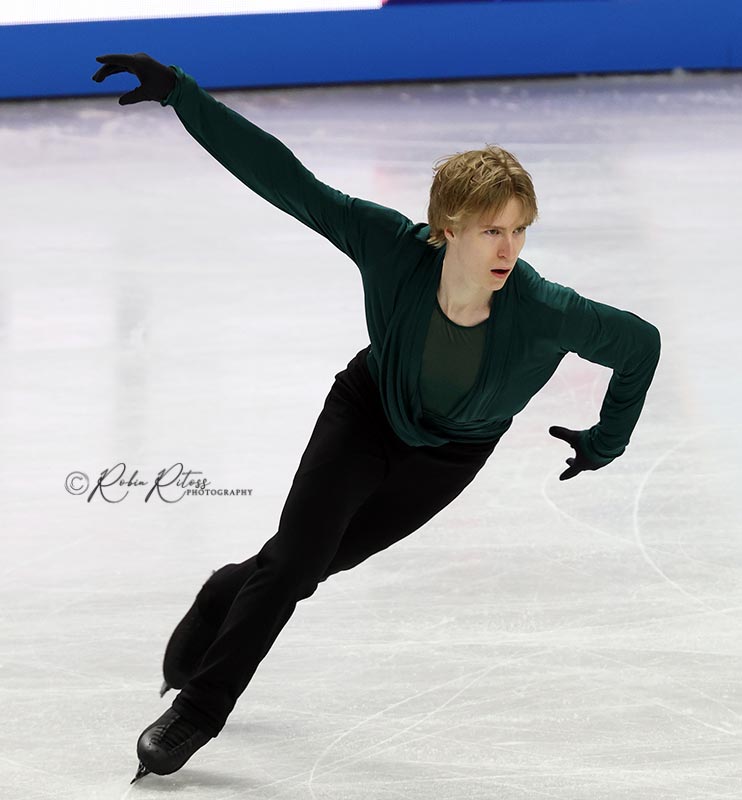
Canada’s Stephen Gogolev, who finished fifth at his first Olympics, continued the trajectory that he has made this season, by finishing fourth in his World Championships debut. His “Piano Concerto No. 2” by Sergei Rakhmaninov free skate included two clean quadruple jumps. He earned a personal best free skate score of 186.66 to finish fourth in the segment. His total score of 281.04 was also a personal best score.
“I’m very happy about the way I performed today, especially this being my first World Championships, and at the same time ending the season on a good note,” Gogolev said following his skate.
It was deja vu for two-time ISU European Champion Adam Siao Him Fa of France. Last month in Milan, he found himself in third place after the short program in medal contention. But after a disappointing free skate, he dropped to seventh overall. In Prague, Siao Him Fa was in second after the short program, but with a fall on the quadruple Lutz and popping a planned quadruple Salchow into a double, he found himself in eighth place in the segment with a free skate score of 169.71. He dropped to fifth overall with a total score of 271.56.
“I’m disappointed. Once again I messed up the free Skate, the Lutz,” said Siao Him Fa.
Also dropping out of medal contention with Estonia’s Aleksandr Selevko, who was in third after the short program. He also fell on his quadruple Lutz and his triple Axel was slightly under-rotated. He earned a free skate score of 173.93 and finished in sixth place with a score of 270.42 points. Both scores were personal best scores.
“I feel really happy,” the 2024 European silver medalist said. “Of course I made a mistake on my first jump and some other small mistakes, but I feel really happy with what I did today. There was a lot of pressure after the short program and having to compete in the last warm up group. I think I handled it quite well. I did not expect to be in this position, it was a huge surprise and I think that was my small victory.”
Team USA’s Andrew Torgashev had his best finish at the World Championships, finishing in the top 10. Teammate Jacob Sanchez, who made his Worlds debut in Prague, finished 12th.
“It’s been such a challenge – training – that I didn’t know what to expect,” Torgashev said following his skate. “I just knew I have a fighting spirit in me and I have a good base so I just went to try and fight for everything and enjoy the last competition of the season.”
“I feel great, I’m more than satisfied with my performance. That was actually my first full free program run through since
the Junior Worlds, so I was out there to see what happens,” said Sanchez.
Women
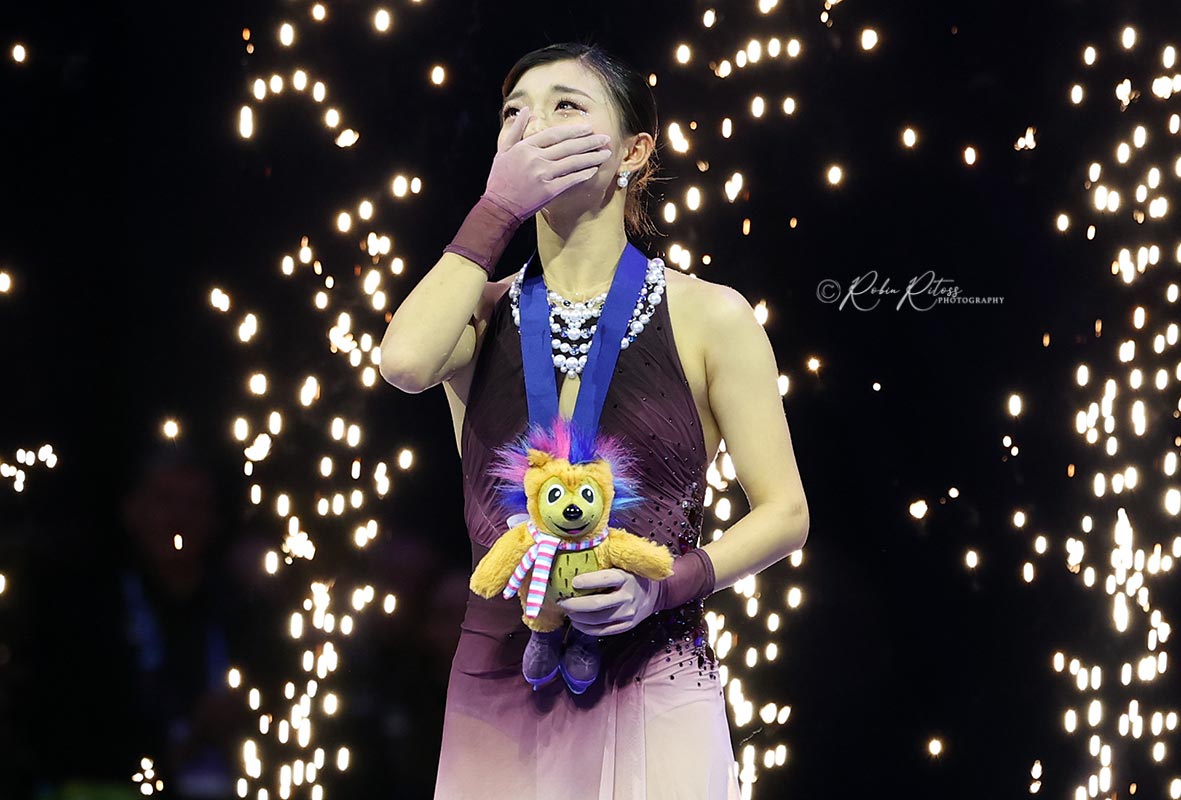 The 2026 World Champions was the finale for Kaori Sakamoto’s legendary career in the sport, and the 2026 Olympic silver medalist skated off with a golden farewell, winning her fourth world title.
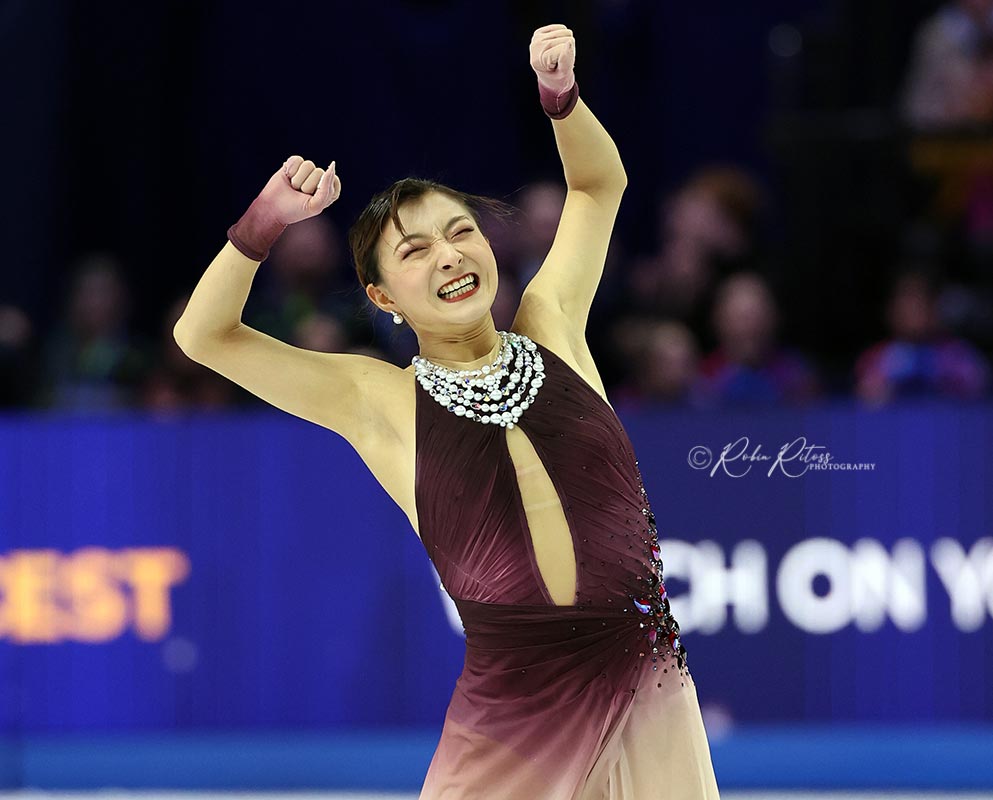
In her Edith Piaf free skate, Sakamoto, who was in first after the short program by less than a point, executed seven clean triple jumps, including a triple flip-triple toe combination in the second half of the program. She earned a free skate score of 158.97, which was a personal best free skate score. She finished first in the segment and won the title overall with a score of 238.28, which was also a personal best score.
“I gave it all I have, there were a few tricky moments, but I think I gave my best,” Sakamoto said about her free skate.
 “Today, I tried not to cry, I was really trying hard not to cry, but I heard so many people cheering for me and applauding me and when I saw that scene, I couldn’t help it. Today, I actually didn’t care about the results, of course, I wanted to skate with no regrets and to do my best, but there so many people supporting me and watching and I wanted to do my best for them,” she added.
With the fourth win, Sakamoto has the most World titles of a female skater since Michelle Kwan won her five World titles in the 90’s, early 2000s. When looking back on her career, which includes four World titles, four Olympic medals (three silver and a bronze), six Japanese titles, a Four Continents title and Grand Prix Final title, the 25-year-old, who turns 26 on April 9, has no regrets.
“I can say goodbye with this performance,” she stated. “I received a lot of support from others and now it’s my time to support the others and be the help for others. I’m still going to do a lot of ice shows if you guys are not tired watching me skate then please come to the ice show.”
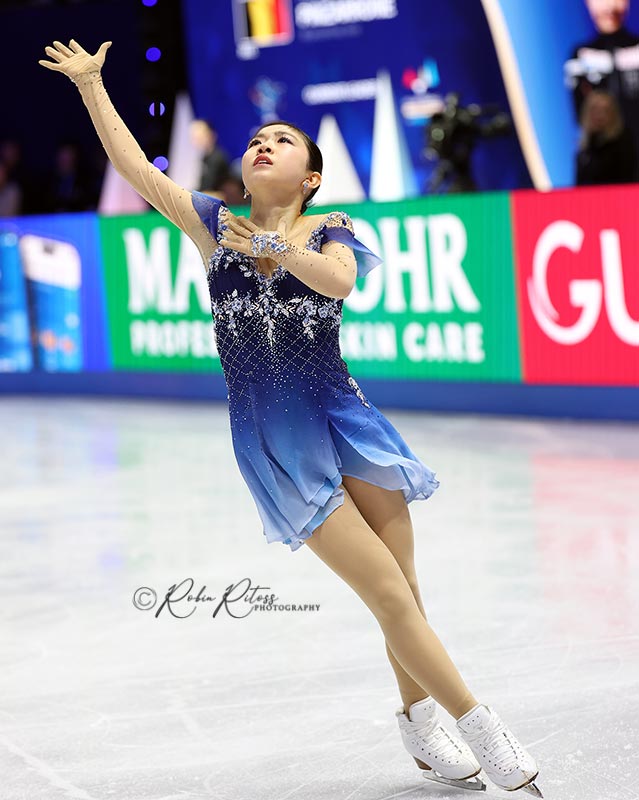 After being disappointed at not obtaining a medal at the Olympics in Milan, Mone Chiba saw herself in position to win her second straight World medal. In second behind Sakamoto in the short program, Chiba opened her “Romeo and Juliet” free skate with a triple flip-triple toe combination. She also did an triple Lutz-double Axel sequence. Her only mistake was stepping out of her triple Lutz-double toe-double loop combination. She earned a free skate score of 150.02, which was a personal best score. She earned a total score of 228.47, which was also a personal best score, to claim the silver medal. This is her second consecutive world medal as she won the bronze last year at the World Championships in Boston.
“The past month after the Olympics, the training was tough, but I’m happy with the results,” Chiba said upon conclusion of her free skate. “I was able to use the frustration and disappointment of the Olympics as fuel.”
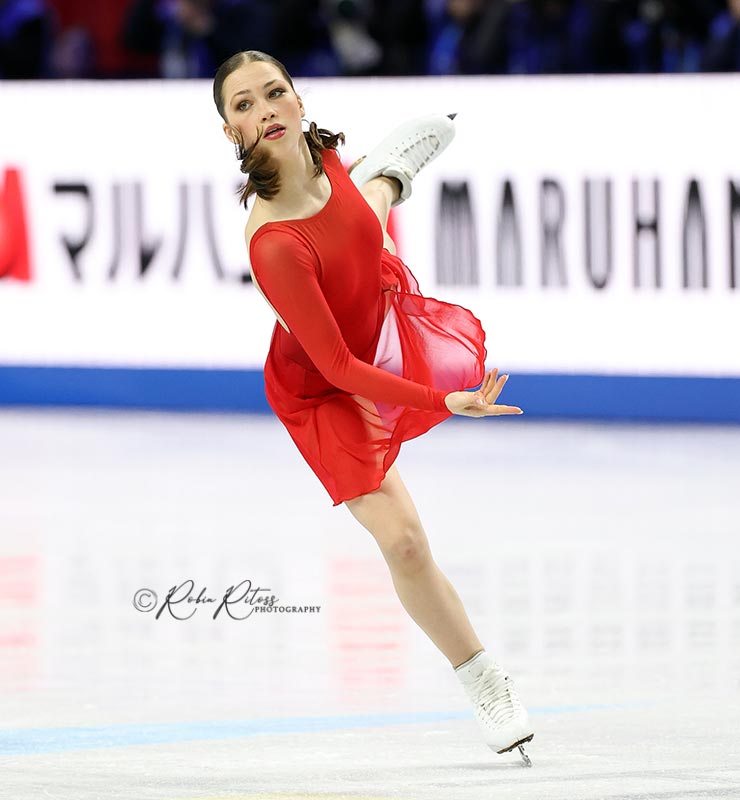 Belgium’s Nina Pinzarrone saw herself in fifth place after the short program. She had commented to the media that she probably drop in the standings after the free skate. But in her “Un Rêve” free skate, Pinzarrone, who finished 13th at the Olympics in Milan, completed seven clean triple jumps, including triple Lutz-triple toe combination. She also executed a triple Lutz-double Axel-double toe sequence. The two-time European medalist earned a personal best score of 143.88, which was third in the free skate. She won the bronze, her first World medal, with an overall score of 215.20.
“I really can’t believe it. I’ve never would have thought to medal,” Pinazzrone said after winning the bronze medal. “I was here just to finish my season on a high note. I would just be happy if I could place in top 5. I don’t think I believe it yet. I have to sleep on it.”
Now that she has won a World medal, Pinzarrone said one of her next goals to become a European champion.
“It’s now becoming two times that I’m first European at Worlds, but I was never the first among Europeans,” she remarked. “However, I just want to enjoy skating.”
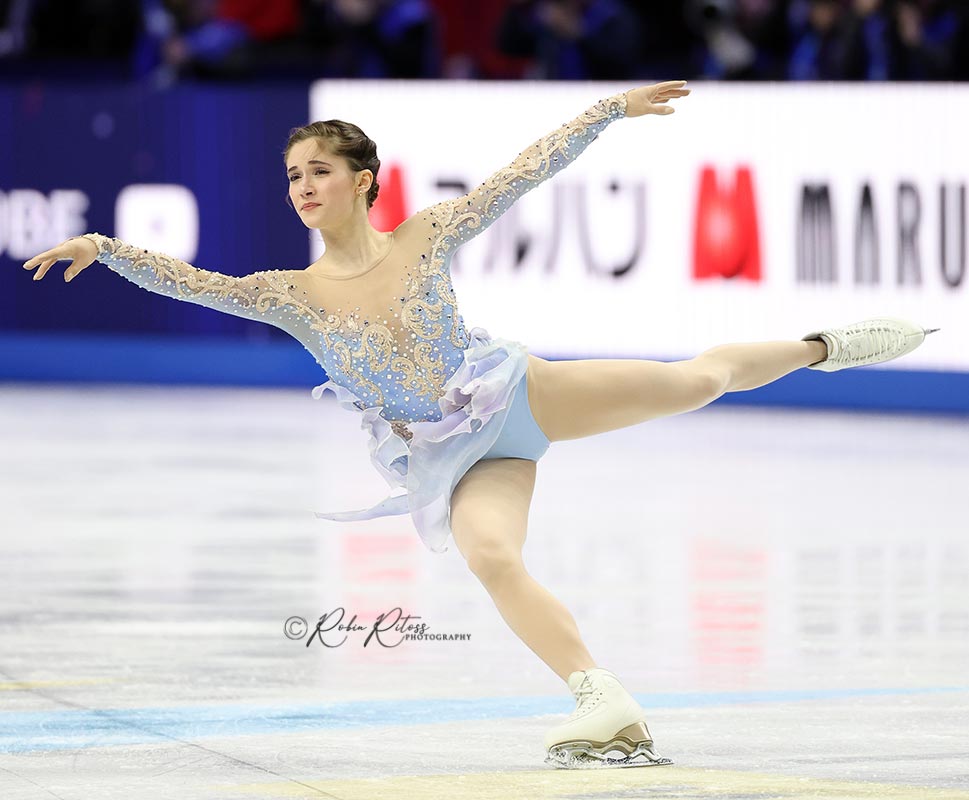 2026 Olympian Isabeau Levito of the U.S. sat in fourth place after the short program, hoping to jump on the podium and win her second World medal. In her “Cinema Paradiso” free skate, Levito attempted a triple Lutz-triple loop combination, but the triple loop was downgraded. Her double Axel in sequence with a triple flip was also slightly under-rotated. She earned a free skate score of 134.83, which was actually seventh in the segment. She earned a total score of 206.99 to finish in fourth place overall.
“I’m so disappointed. I trained very hard after the Games. This competition is very hard. My consistency was really terrible. I missed elements I wanted to show,” a disappointed Levito said after her skate.
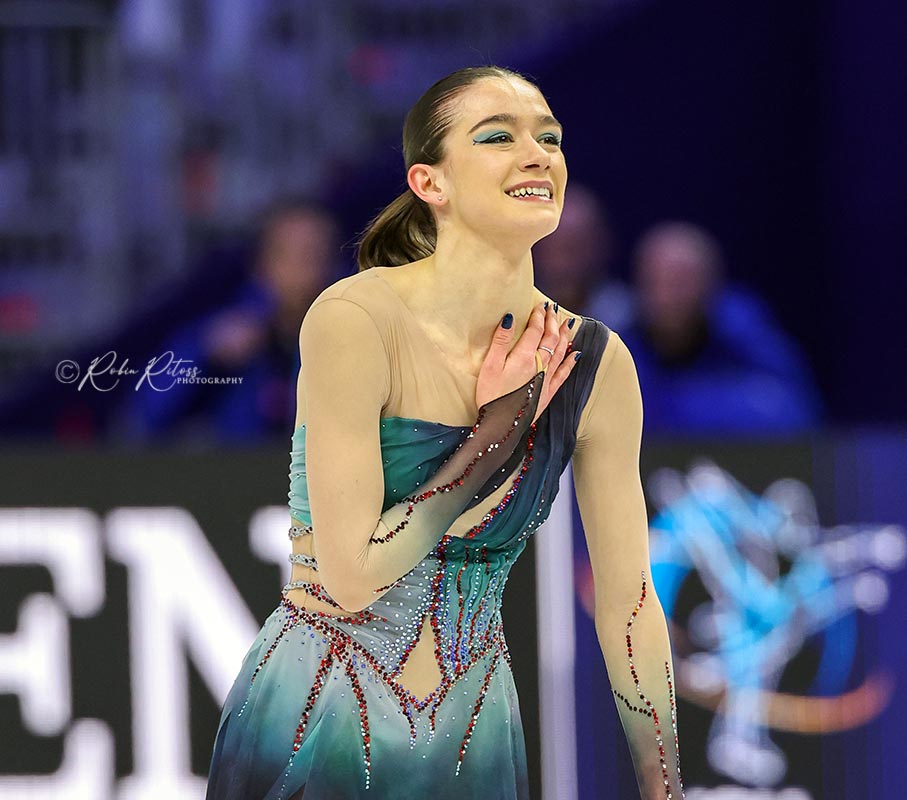 2026 Olympic team bronze medalist Lara Naki Gutmann of Italy was in seventh after the short program. In her Jaws free skate, she executed five clean triple jumps, including a triple Lutz-Euler-triple Salchow combination. She had two jumps, a solo triple Lutz and a double Axel in sequence with a triple toe that were slightly under-rotated. She earned a free skate score of 135.79, which was fifth in the free skate. That was a personal best score. She moved up to fifth overall with a total score of 205.12, which was also a personal best score.
Three-time U.S. Champion and Olympic team gold medalist Amber Glenn found herself in third place after the short program, just one skate away from securing her first World medal. In her free skate, Glenn opened with a illustrious triple Axel and completed triple flip-triple toe and triple Lutz-double toe combinations. But then the triple loop, which was her only mistake in the free skate in the women’s event at Olympics turned out to be trouble for her again as she singled the jump in the free skate in Prague. She also popped her double Axel in sequence with a triple flip. She received a free skate score of 130.47, which was ninth in the segment. She finished sixth overall with a score of 203.12.
“I just lost focus,” Glenn said of her skate. “I did the hard stuff and I let the easy things kind of get away from me.”
Two-time European Champion Niina Petrokina of Estonia moved up from 11th place to finish 7th overall. Korea’s Jia Shin, who was making her senior Worlds debut, delivered the fourth best free skate of the event and finished the event in eighth place. 2026 Olympic bronze medalist Ami Nakai finished ninth and Georgia’s Anastasiia Gubanova was 10th. Team USA’s Sarah Everhardt, who replaced Olympic champion Alysa Liu, was 11th.
Pairs
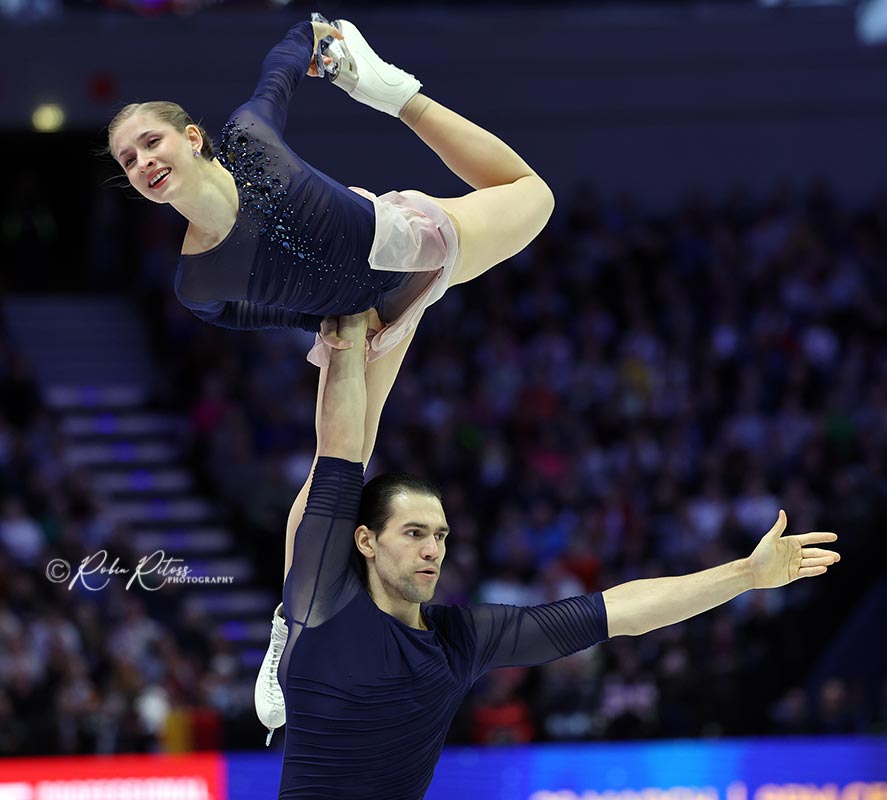 Last year, Minerva Fabienne Hase and Nikita Volodin of Germany won the free skate at the World Championships, but missed obtaining the gold medal by 0.71. Their final lift of the program made all the difference.
At 2026 World Championships in Prague, the 2026 Olympic bronze medalists found themselves with a slim margin of 0.33 points over Anastasiia Metelkina and Luka Berulava of Georgia, the 2026 Olympic silver medalists, after the short program. In their “Memoryhouse” free skate, Hase and Volodin opened with a huge triple twist and a side-by-side triple toe-double Axel-double Axel sequence. Hase also landed a throw triple loop and throw triple Salchow. Their only mistake was with the side-by-side triple Salchows as Volodin doubled the Salchow and Hase stepped out of the landing. They earned a free skate score of 148.55, and a total score of 228.33, which was a personal best total score. They took home their first World title and Germany’s first World title since 2018 when Aljona
 Savchenko and Bruno Massot won the gold medal a month after winning their Olympic gold medal. Both Savchenko and Massot were in Prague and saw Hase and Volodin win the title.
“It’s a dream, now it’s true, it’s happening,” Volodin said. “My mother sent me a message yesterday about something I said in first grade: ‘I want to be a World Champion.’ Yes, you didn’t think it was possible, and now it’s happened.”
In terms of next season, Hase and Volodin said they will do some shows this spring and then will sit down together in mid-May to discuss how to proceed.
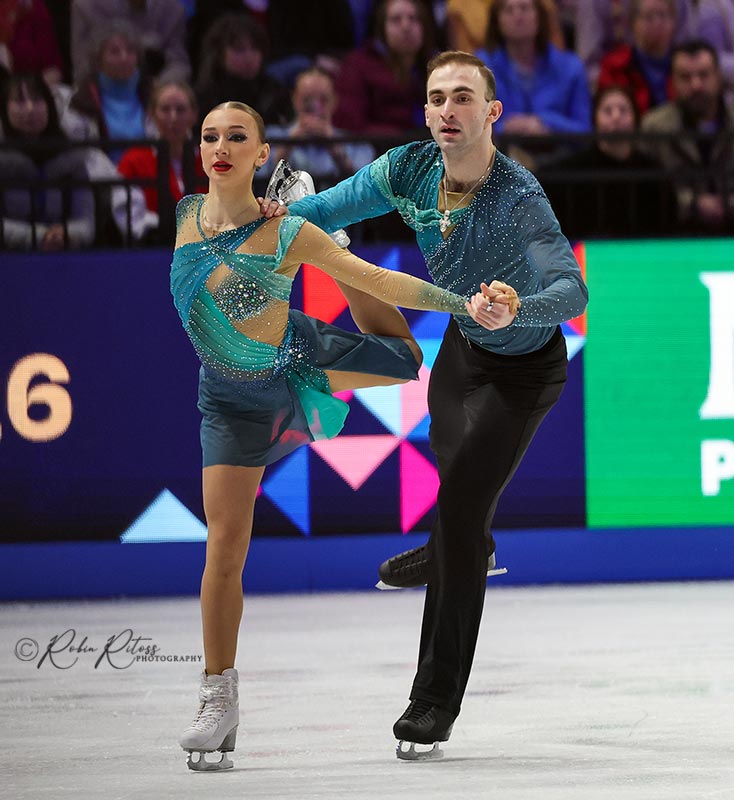
Metelkina and Berulava skated ahead of Hase and Volodin. Their “Le discours d’Arthur” and “Keeping Me Alive (Acoustic)” free skate included a triple twist, side-by-side triple toes and a throw triple flip. However, they lost points as Metelkina fell on the throw triple loop and their double Axels in their triple Salchow-double Axel-double Axel sequence were under-rotated. Also, their death spiral was a level one. With the multiple mistakes, the pair earned a free skate score of 139.96, which was fourth in the segment. Their total score of 218.41 was enough for them to remain in second place and earn Georgia’s first World medal.
“It’s great, the season is over, it’s always nice to finish it,” said Berulava. “I wish we had a better skate. We made some serious mistakes, but thanks for the silver, we are so grateful.”
“We are really proud and it’s all thanks to our federation and the president of our skating federation who believed in us, supports us and does everything she can for us,” Berulava added on winning Georgia’s first ever World Championship medal.
“I am so glad the season is finally over, it was such a hard season, we are so tired,” Metelkina said. “Of course we made mistakes, some serious ones, but mentally am drained 100% and I can only think of the vacation now.”
In terms of their future plans, Berulava said he doesn’t want to think about figure skating for the next two months. Metelkina plans to go to Thailand with her mom before getting ready for next season. She said her and Berulava don’t have any plans yet and don’t know who will choreograph their programs.
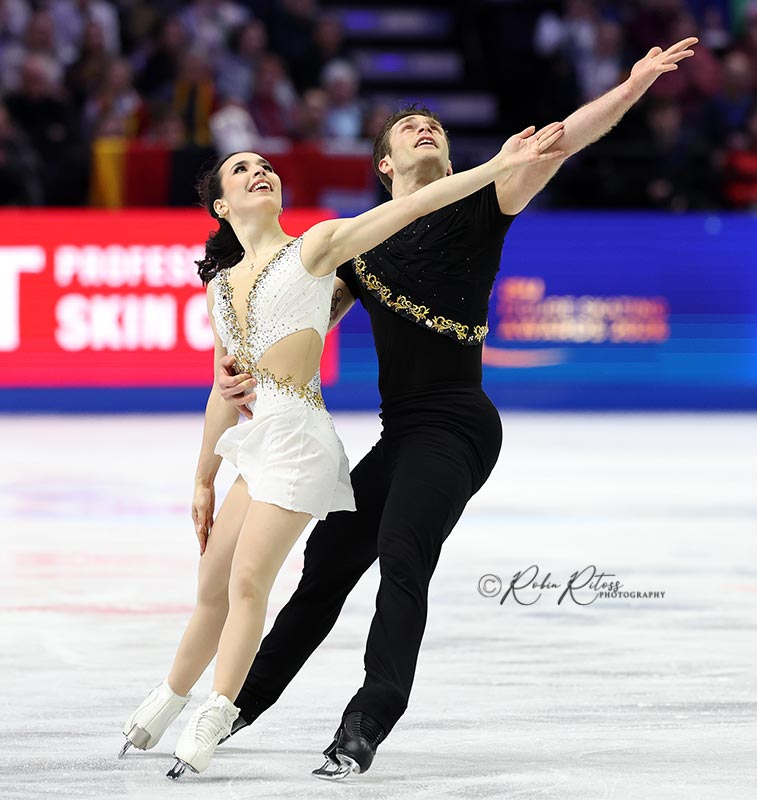 For the second time this season, Canada’s Lia Pereira and Trennt Michaud found themselves sitting in third after the short program with a medal within their grasp. In their “Gladiator” free skate, the pair opened with triple twist and a side-by-side triple toe-double Axel sequence. Pereira also landed a throw triple loop and triple Lutz. Their only mistake was with the side-by-side triple Salchow. They earned a personal best free skate score of 140.57, which was second in the segment. The Canadian Championships earned a total score of 216.09, which was also a personal best score, to earn the bronze medal.
“I think it is a little hard to describe right now the roller coaster of emotions,” Pereira said. “While we were on the ice and throughout the program, I think we were just proud of how we handled all of it. We skated our hearts out there and I think that was shown. So I am very proud and happy.”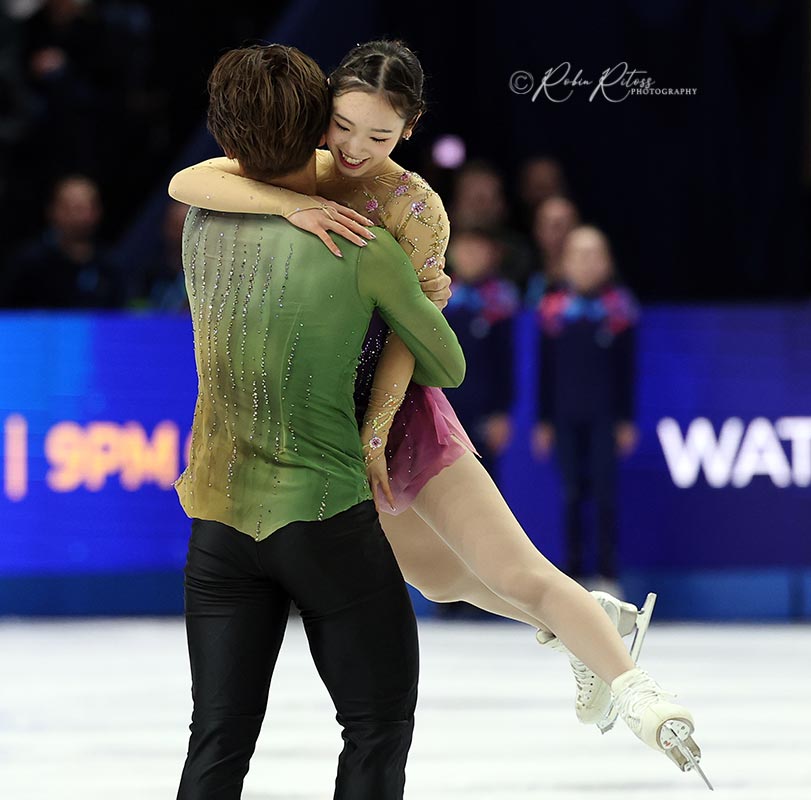
With Olympic champions Riku Miura and Ryuichi Kihara not competing at Worlds, Yuna Nagaoka and Sumitada Moriguchi were the sole competitors for Japan in the pairs’ event. In fifth after the short program, the 2026 Four Continents bronze medalists’ “The Tree of Life Suite” free skate included a triple twist, a side-by-side triple loop-double Axel-double Axel sequence and side-by-side triple toes. The only element were they lost points on was the throw triple Salchow. They earned a free skate score of 139.58, which was a personal best score and third in the segment. They earned a total score of 209.13, which was also a personal best score. Nagaoka and Moriguchi moved up to finish in fourth place.
The 2026 ISU European bronze medalists Maria Pavlova & Alexei Sviatchenko of Hungary dropped from fourth after the short program to finish in fifth place with a free skate score of 135.16, which was sixth in the segment. They finished with a total score of 205.08.
2026 Four Continents Champions and two-time U.S. Champions Alisa Efimova and Misha Mitrofanov rounded out the top six. Their “Love Story” free skate earned a personal best score of 135.22, which was fifth in the segment. They pulled up from seventh after the short program to finish sixth with a total score of 202.51.
“A lot of things were different today compared to yesterday. I felt strong today and my goal was to come back and show this to everyone. As I told Misha right after the skate that I think we did it. We made it today,” said Efimova.
“I told Alisa how proud I was of her, that we fought through and we never gave up. That’s all we came for here,” said Mitrofanov.
2026 Olympians Emily Chan and Spencer Akira Howe, of the U.S., who were in sixth after the short program, suffered three falls in their “Ghost” free skate. They finished the segment in 20th place and dropped to 16th overall.
“This is obviously not the easiest sport and it doesn’t matter how hard you are training, mistakes can happen. Even though we’ve got the call on short notice I didn’t feel we’re out of shape. Today just wasn’t our day,” said Howe.
Teammates Katie McBeath and Daniil Parkman, the 2026 U.S. bronze medalists, finished in 12th place in their Worlds debut.
Dance
Olympic champions Laurence Fournier Beaudry and Guillaume Cizeron won their first World Championships as a team. For more on the ice dance event, visit Ice-Dance.com.
Team allocations:
Women:
3 spots: U.S. and Japan
2 spots: Belgium, Estonia, Georgia, Italy and Korea
Men:
3 spots: France, Japan and U.S.
2 spots: Canada, Estonia, Italy, Switzerland
Pairs:
3 spots: Georgia, Germany
2 spots – Switzerland, Armenia, China, Canada, U.S., Japan, Hungary
Dance:
3 spots: Canada, France and U.S.
2 spots: Czech Republic, Spain, Georgia, Great Britain, Lithuania