By Maura Sullivan Hill, Team FSO writer
Photos courtesy of Nashville Skating Academy/Photos by Linde LaChance
Synchro9, Alysa Liu and Mikhail Shaidorov photos by Robin Ritoss and Giada Arioldi
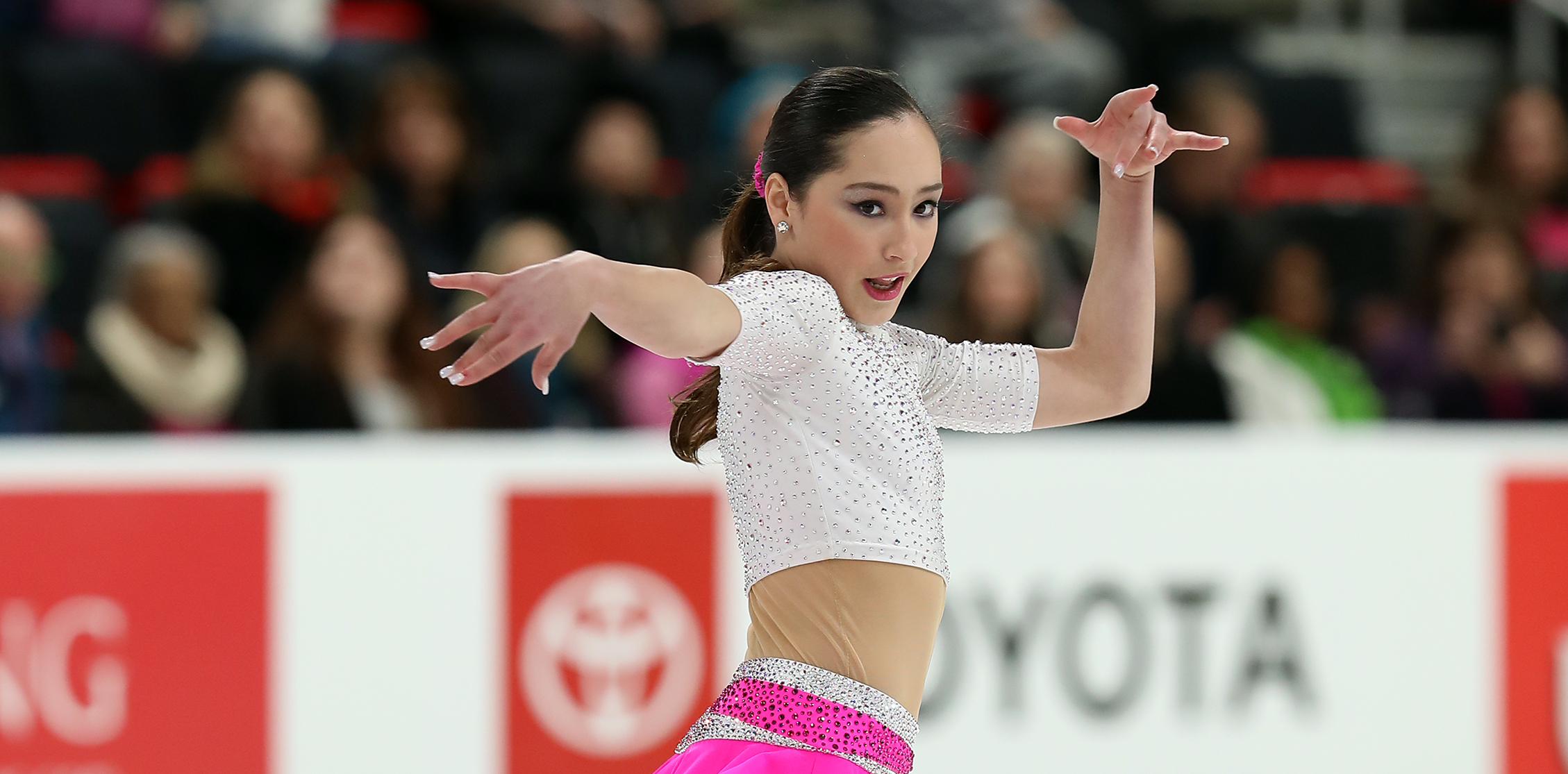
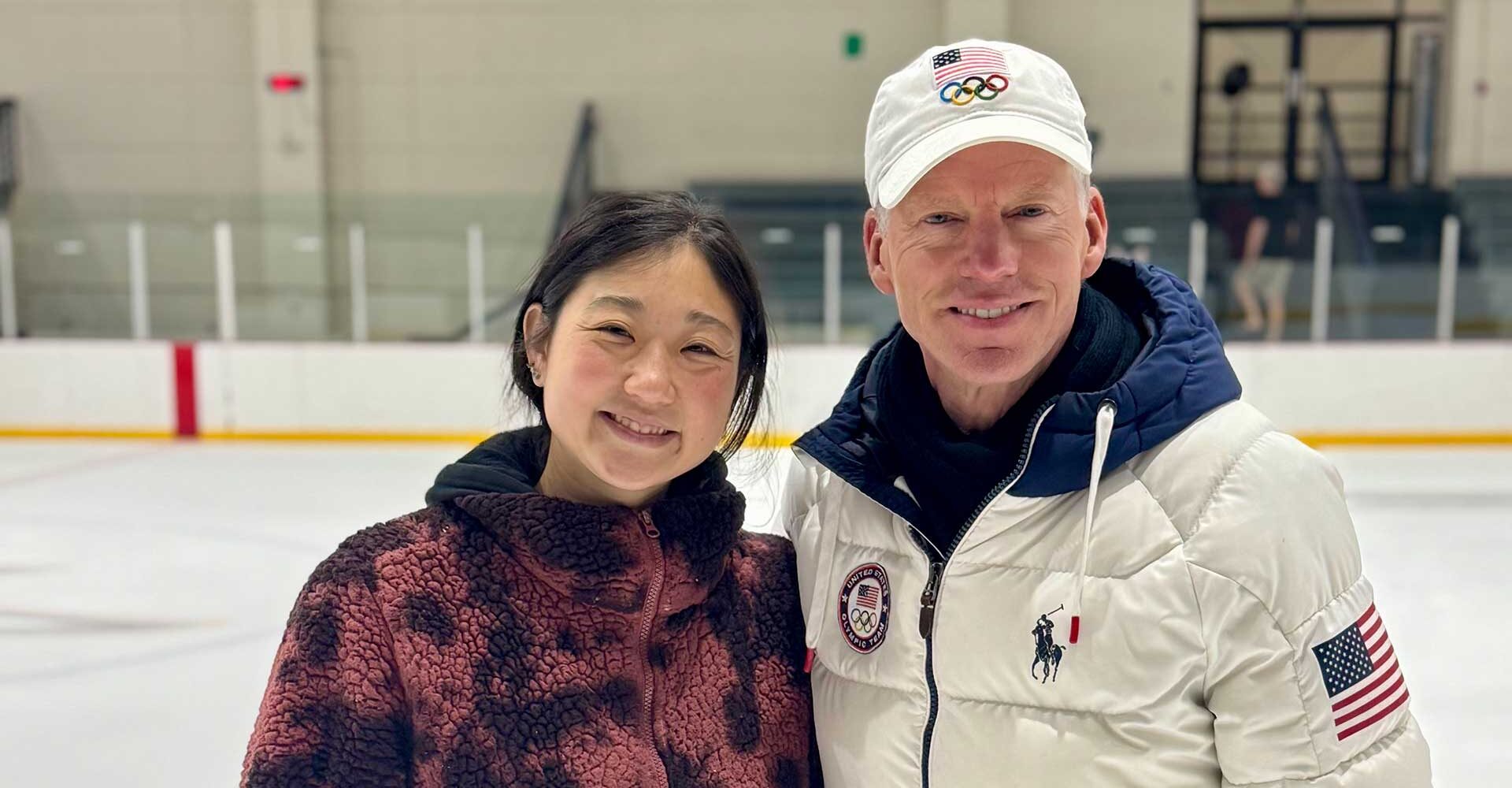
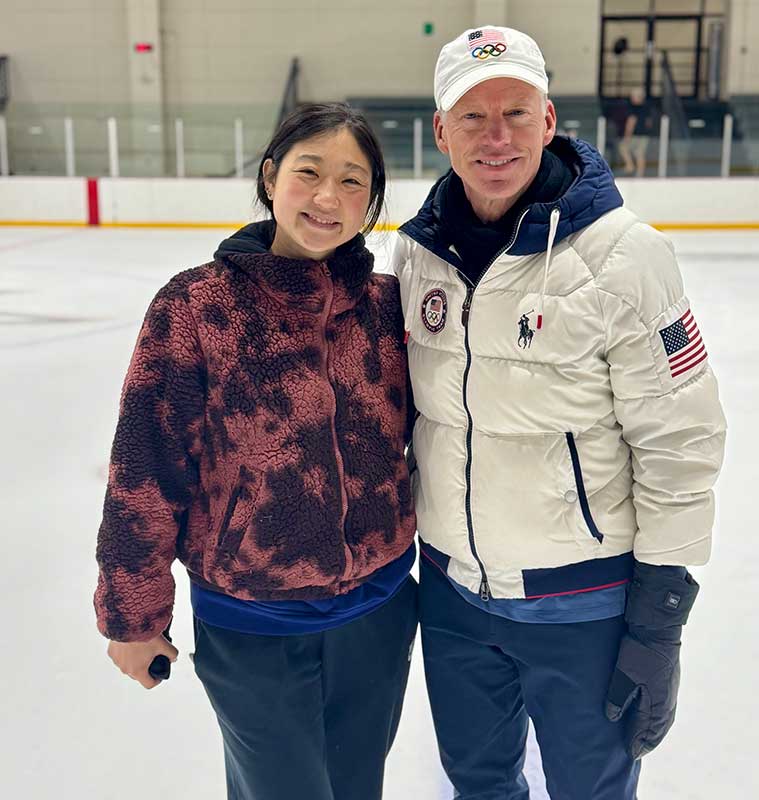 In 2018, Tom Zakrajsek coached Mirai Nagasu to her second Olympic appearance, in PyeongChang, South Korea, where she became the first American woman to land a triple axel at the Olympic Games. In 2026, the duo has reunited, this time as coaching partners at a series of training camps for elite figure skaters.
They started in Nashville the second week of June, as guest coaches at the Nashville Skating Academy’s annual Train with the Best Camp. More than 100 skaters came to the camp to learn from Nagasu, Zakrajsek, and the coaching team at the Nashville Skating Academy, which operates out of three rinks in the city and trains skaters from the beginner to elite level.
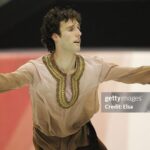
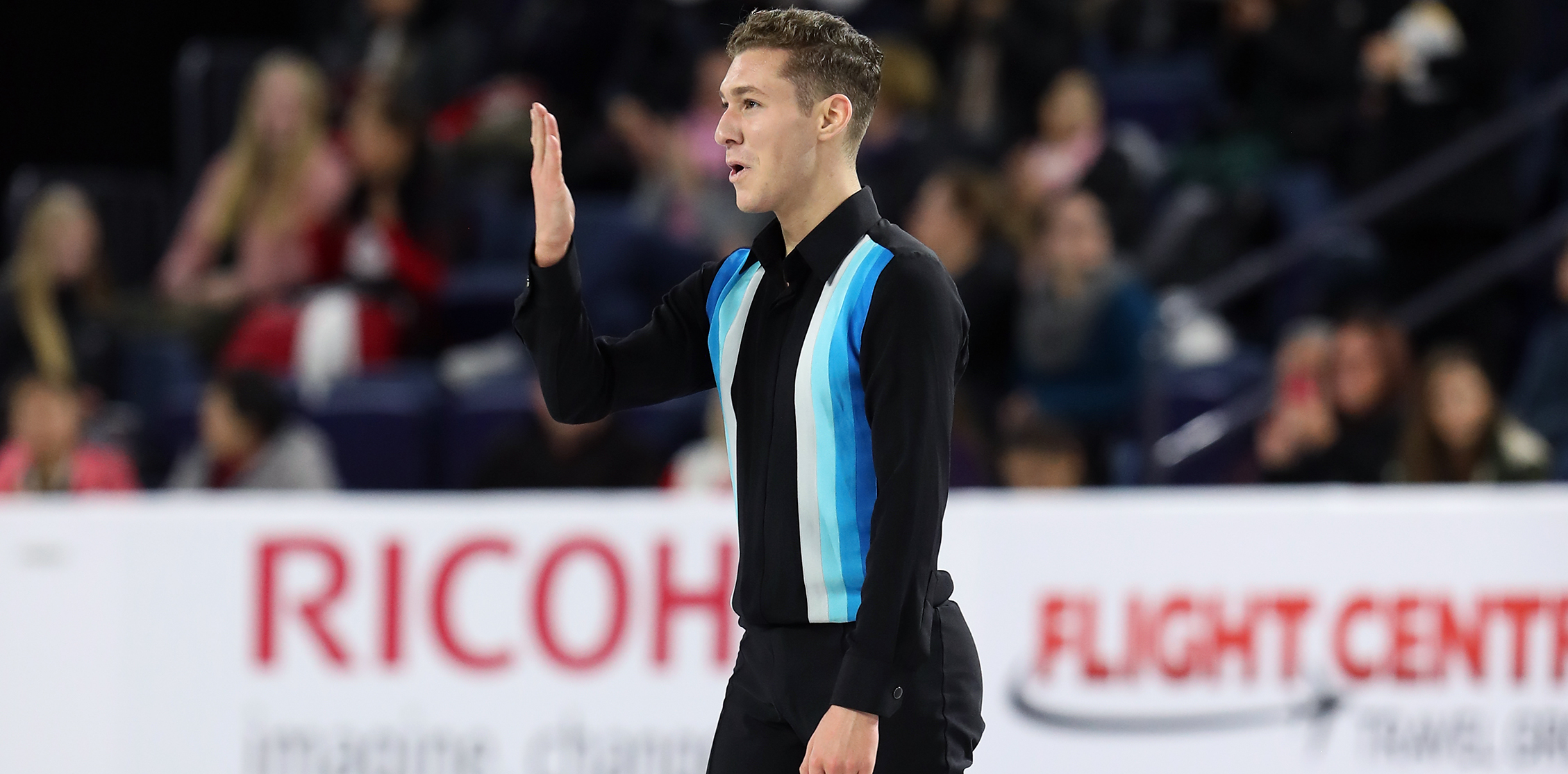
Zakrajsek coaches at the World Arena in Colorado Springs, Colorado, where he has guided the careers of Olympian Vincent Zhou and U.S. Champions including Ryan Bradley and Jeremy Abbott, in addition to Nagasu.
Nagasu now lives in Boston, where she coaches at the Skating Club of Boston and North Shore Skating Club.
Team FSO’s Maura Sullivan Hill, who is also a coach at the Nashville Skating Academy, caught up with Nagasu and Zakrajsek during a Zamboni break on the last day of camp.
Their conversation has been edited and condensed for clarity.
FSO: What is it like to be back working together at Train with the Best this week?
TZ: Mirai and I have a four years together that was really, in my coaching career, a very special part of it. So to be back with her on the ice again, and now she’s coaching [is very special]. I told her the other day, I just look around and I see how all the students look at her, and she has a way of making them feel good and confident about how they’re moving their bodies, which is a characteristic of a really good teacher.
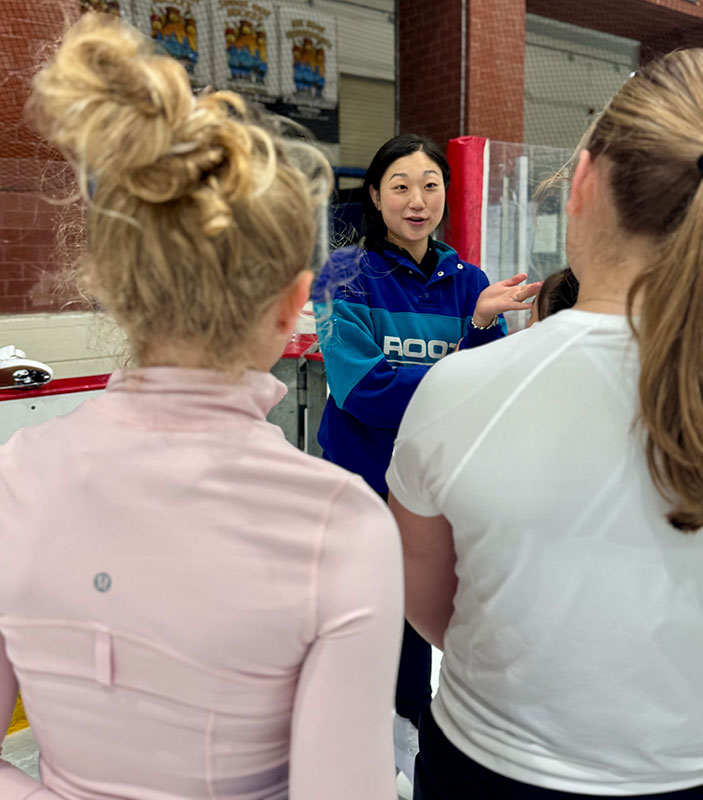
MN: Thank you! Train with the Best is very hard for the athletes, for all of us, because we’re trying to impart on them so much information, so that they can take it back to wherever they’re from and work on it. Laura [Sanders Holzman, director of Nashville Skating Academy and Train with the Best] said that only 10% of the campers are from here, so people are coming to you to get more knowledge and experience. And it’s always great to feel like you’re a part of something bigger than yourself. So I feel like every day that we finish out the day, I feel like I’ve done my best and I feel like the athletes have as well. To be part of that and the next generation, having that part of my legacy with them means a lot to me.
FSO: What do you hope the skaters get out of this week?
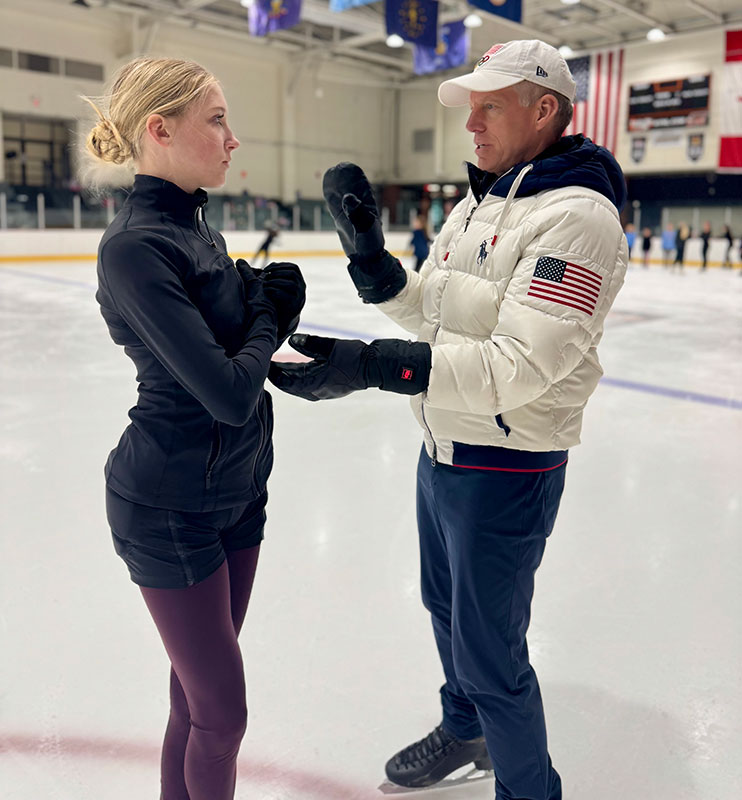
TZ: It’s camp, so what I keep telling them at the end of their private lessons or group classes, is that I hope that I made skating fun for them and I hope they had fun at camp, because that’s what you do at camps. And then I also was hoping that maybe my language of skating, whatever knowledge I have, if that added to their understanding of the sport or their skill, then that makes me happy. If they can come away with an exercise or some bit of wording that helps them learn their jump or refine it and make it a little better, then I’m happy. So those are the two things I want for them. And, of course, I’ve been telling them all: Make friends, talk to each other, because like Mirai said, they are coming from all over the country, so when you get a chance to skate with people who are in the skating family, it’s fun to branch out and meet new people.
FSO: One of my students told me how you [Zakrajsek] did an entire class on a salchow, and she said there was so much to learn and was soaking it all in. And then her salchow was better in her next lesson!
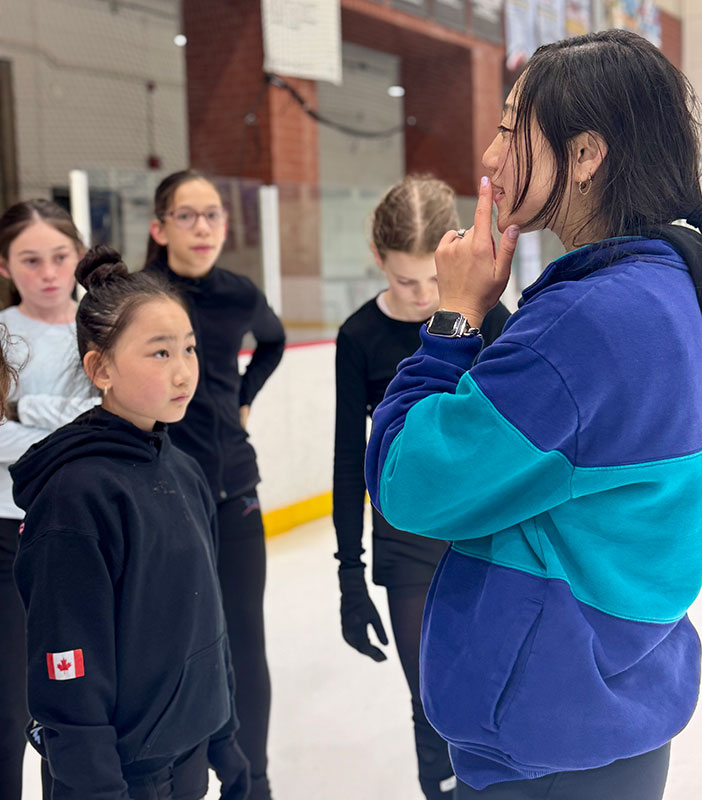
MN: I liked working with Tom because he would really nerd out over jumps. With the way the setup was at the World Arena, our lessons were only 20 minutes long, and that goes by so quickly. And I was always very task-oriented and focused. Sometimes he would take a little long to explain something, and I’d be like, well, we have so many jumps we have to do, we have to do a program, so, mid-explanation, I would leave! Like, okay, he already gave me one correction, and I’d be gone to do it. Do you remember that?
TZ: Yeah, but remember, you were already an elite athlete. These young kids learning their salchow, those are the ones I want to give the details to, because that’s the foundation, right? Then they could do their double or their triple or whatever from it, so I wouldn’t coach you for 45 minutes on that.
MN: I think now, maybe in a different setting, I would really enjoy it. We don’t learn skating in a classroom and learn the history of figure skating, but I think I would enjoy a class like that. In my coaching, I’m always about keeping them going. Let’s teach them how to warm up, let’s run them through their jumps and really get their body going, whereas then they can apply the technique that Tom is sharing with them. My strength is feeling the vibe of the athletes. I could tell when they were really tired, and I’d be like, well, we don’t have to work on jumps all the time; spins have so much weight in our programs, let’s spin.
TZ: That makes me think of something Laura said to me this morning, because we were talking about different types of teachers and coaches. When she reached out to me about the camp, she said, “Which of your former students would you like to have with you?” And I said Mirai Nagasu, and she was saying this morning, “You two complement each other so well, like how you approach it and how she approaches it are similar, but very different,” and she was so happy that the kids were getting both perspectives.
FSO: How often do you get to work together like this?
TZ: Mirai is going to be at my Aspire Higher camp in Westminster in a few weeks, July 3-11, so we’ll get to see each other again soon. And we do have something on the docket for September. We don’t have the dates finalized, but we should be in Rome together, so this is going to be a special year.
MN: I have four students going to the Aspire Higher camp with me, and I’ve already told them, “Don’t sign up for private lessons with me.” This is your opportunity to learn from other coaches and get their perspective, because, a lot of times, sometimes just a different perspective or opinion, they’ll pay more attention to a new voice, and that is part of the learning process.
FSO: How is parenthood and your son, Mirai?
MN: He’s two now. I really appreciate that my parents found me something that I’m so passionate about, so I really want to make sure that he has something that he can really gain life skills from, because my overall goal is that he’s a well-balanced adult.
FSO: What are your thoughts on some of the new rule changes from the ISU?
TZ: I think change is good, for sure. For me as a coach now, it doesn’t really matter what my opinion is about the rules, because the powers that be make the rules, and all we have to do as a community is support the rules and follow the rules. So, unless you’re involved in that decision-making process about the rules, you just have to accept it, and learn what the expectations are, so that you can deliver what you need to, especially in regards to, like, the creative spin. That’s a new thing in the rules, but there’s so much about how you have to deliver it to get the GOE, and to make sure it’s valid, so you have to learn that, and then just do it, right? So part of me is just accepting of whatever changes happen, because it’s really out of our control as coaches or members of the community.
MN: I’m going to put this out in the universe: I’m waiting for the day that double axel-triple toe is worth more points than a triple toe-double axel. Because back in my day, double axel sequences weren’t really around, and now they’re only going to be doing two combos [in a long program], so maybe a triple toe as a second jump would be worth more value, is my viewpoint.
TZ: I think what the ISU is doing with the euler not counting as a jump will make three-jump combinations more interesting. Because now you can actually have three actual jumps, and the euler won’t count as a jump, so it’ll be cool to see how, especially, the best of the best put together those combinations with the euler and the step axel to see what they come up with, right? To me, that’s a really good idea that makes the sport more interesting.
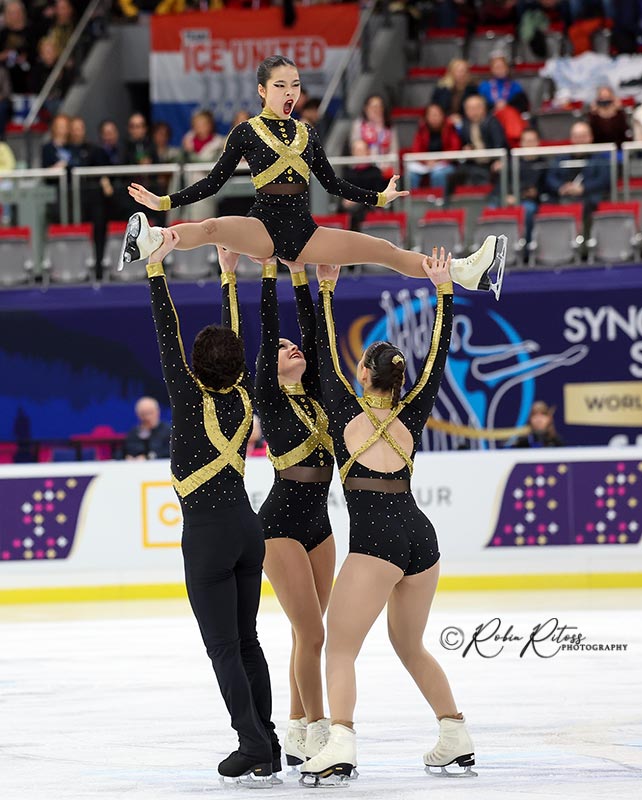
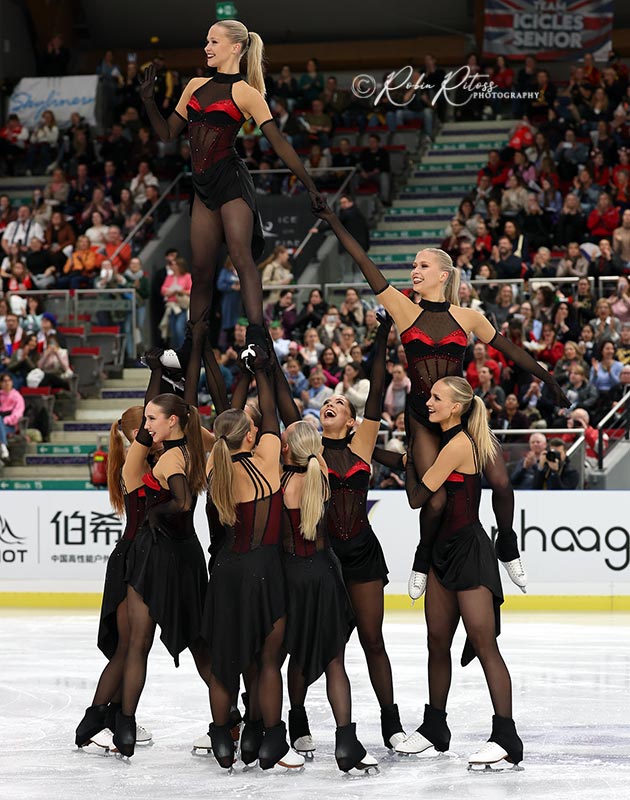
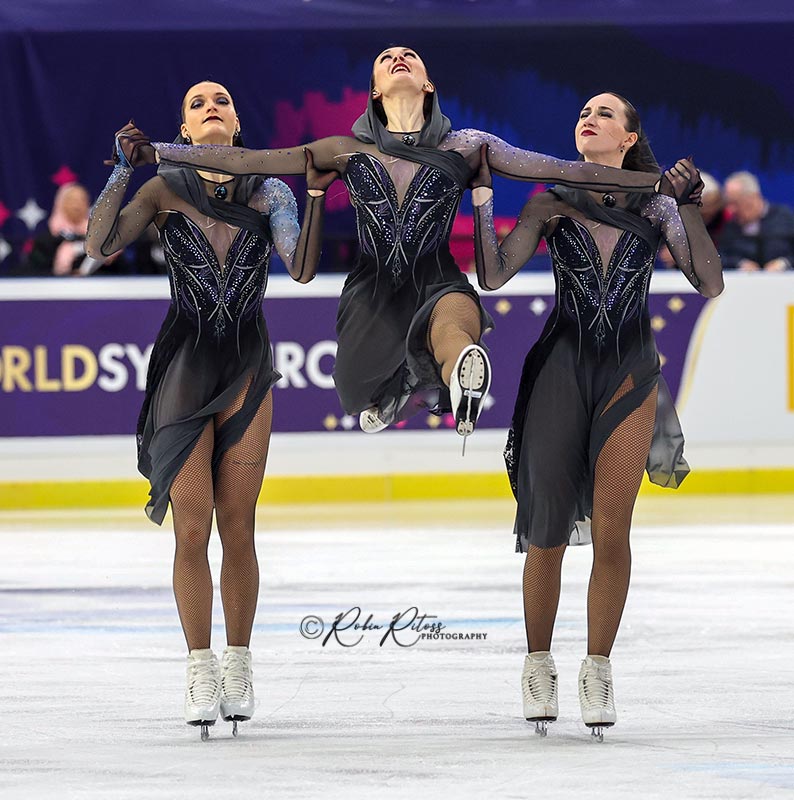
MN: Oh much better, I do appreciate that. And I’m excited about Synchro9 [the new ISU synchronized skating discipline with smaller teams], because it’s already replaced pairs at the Youth Olympics. They’re still figuring out all the rules of how it will be scored, so I think that will be fun to watch, too.
TZ: Synchro is so hard, and I didn’t realize that until a few years ago, when the U.S. Championships and the World Championships were at the World Arena within a few years, and when you see the very best do it, you go, oh my gosh. I can remember when it was called precision, and how it has evolved since those days. The music, and the performance, and the costumes, and the moves are even very different from early days, so that’s kind of cool.
MN: They’re aiming for 2030 [inclusion in the Olympics].
TZ: It should be in the Olympics.
FSO: Speaking of the Olympics, what stood out to you at the Olympics in Milan this year?
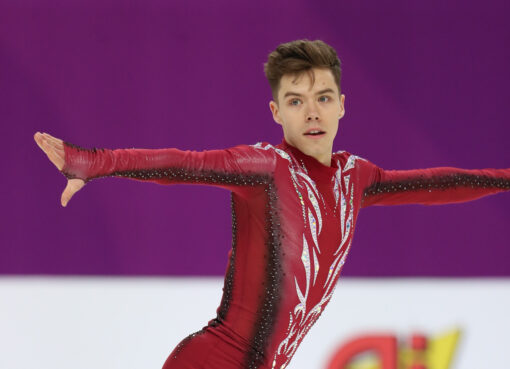
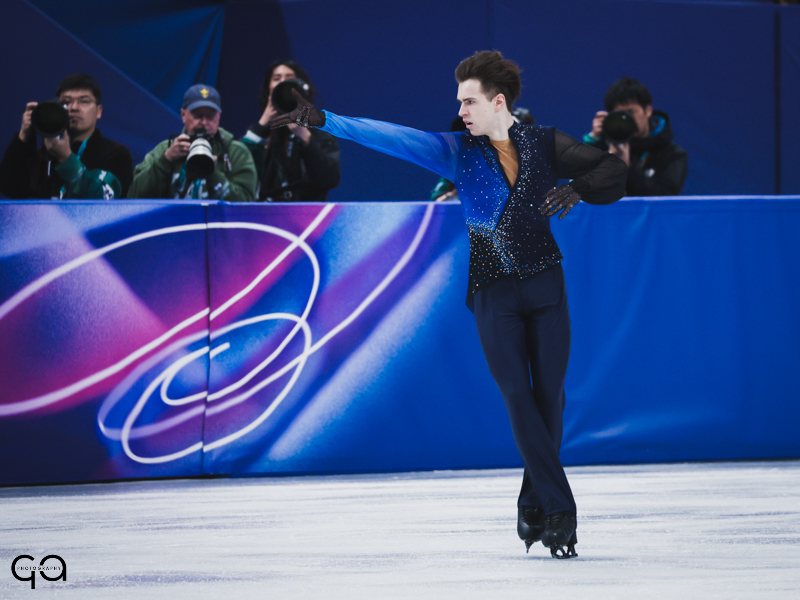
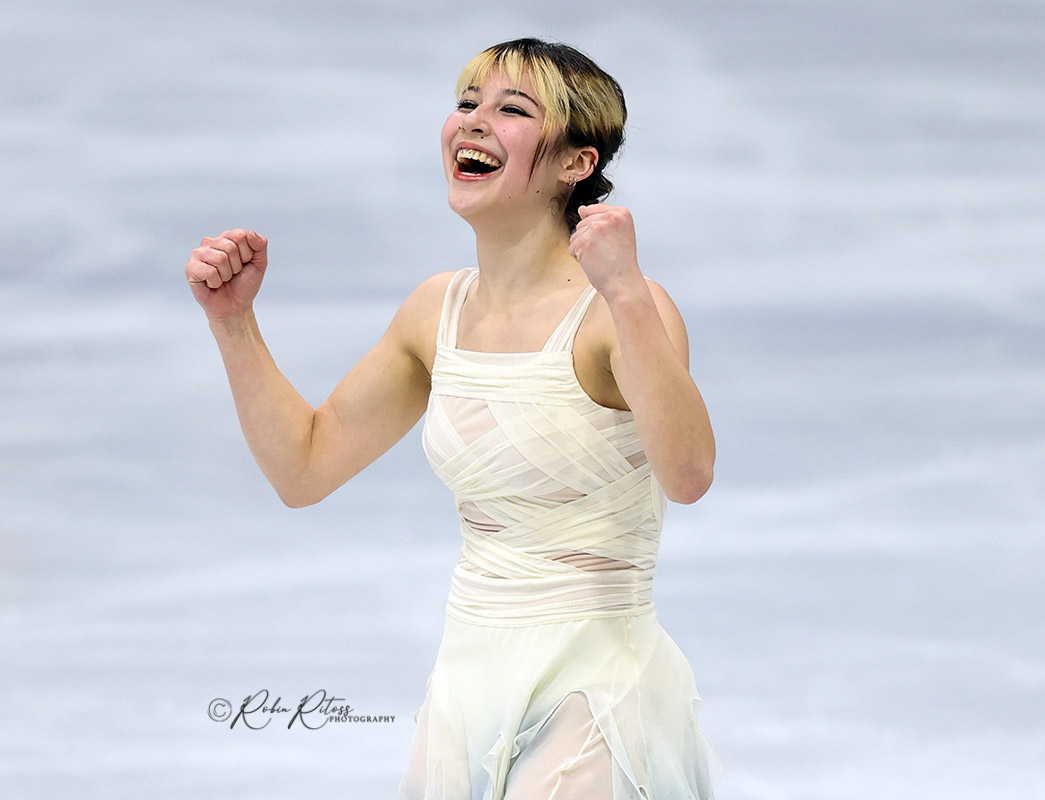
TZ: To me, it was the judging, meaning I think they got it right in every discipline. Because I don’t think, either on the technical [panel] side or the judges’ side, there looked to be any favoritism. If you look at how it was called and how the numbers fell, that’s how you got your winners, especially in the ice dancing and also in the ladies. Because Kaori [Sakamoto, of Japan] clearly won the PCS, and she would have been the Olympic Champion without that one left out combo. However, Alysa [Liu, of the U.S.] had the GOE and, even though she was second in the PCS, she deserved to win that day. Same thing with Mikhail Shaidorov [of Kazakhstan] winning the men’s event. That was the skate of his life, and he deserved it. Me, as a spectator, I was sitting in my living room with my wife, I totally enjoyed watching it, and I just was really proud of the judges and the tech panel. I thought it was really well-judged and officiated.
MN: I’m enjoying the halo effect and seeing the effect that Alysa has had on our learn-to-skate programs, and how many people are into skating right now.
FSO: Skating is in the ether again.
TZ: We had dinner [here in Nashville] and the waiter knew Alysa Liu and her story. [Skating is getting attention] in a way it hasn’t been since Tonya and Nancy. And what a nice way it’s in the ether again, because she brings so much joy, positivity, and authenticity.
Thank you to Tom and Mirai for sitting down with FSO during a busy camp week!
For more information on the Aspire Higher camps, visit the Coach Tom Z website. For skaters interested in Nashville Skating Academy’s Train with the Best camp, save the date for June 2027 and check their website in January 2027 at nashvilleiceskate.com.